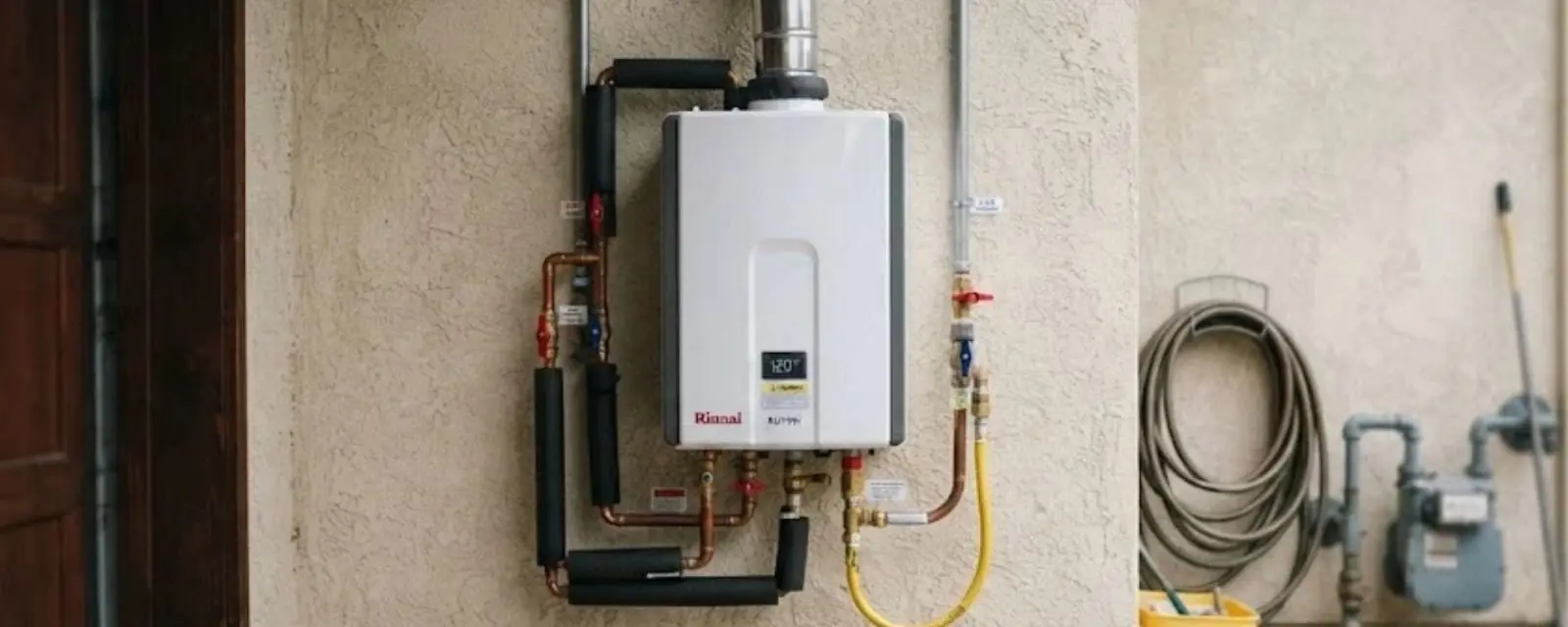
What counts as a small tankless unit
Small tankless units fall into two groups. Point-of-use electric models are the size of a shoebox or a small cabinet and heat water for one sink or shower. Compact whole-house gas or electric units are bigger but still much smaller than a tank, and they serve a small apartment or a household with modest demand.
All of them work by heating water as it flows. They do not store hot water, so the key number is flow rate in gallons per minute at a given temperature rise. That number decides whether a small unit satisfies your needs.
The flow rate problem in a cold climate
Incoming water temperature changes with the season. In a New England winter the supply can be much colder than in summer, so the unit has to add more heat. At the same power, it delivers less flow. A unit sized for July may fall short in January, a mismatch that catches many first-time buyers.
| Unit type | Typical use | Watch for |
|---|---|---|
| Point-of-use electric, under sink | One sink or a hand basin | Low flow, dedicated circuit |
| Point-of-use electric, shower | A single shower, winter flow may drop | High amperage, panel capacity |
| Compact gas whole-house | Small home, one bath | Gas line size, venting |
| Compact electric whole-house | Small apartment | Panel upgrade |
The electrical load is the other limit. Electric tankless units pull a lot of current. A small unit may need one or two dedicated circuits, and an older panel may not have room. A licensed electrician may need to add capacity.
When a small unit is a good idea
- A far-off bathroom with a long wait for hot water
- A basement or in-law suite with a single sink
- A workshop or laundry sink that needs hot water occasionally
- A small condo or apartment with limited space
In each of these, a point-of-use unit cuts the wait and the wasted water. It does not replace your main heater. For whole-house service, see the tankless water heater page, which covers gas and electric units and the yearly flush.
Hot water too slow to arrive?
Call (339) 216-9771 to discuss a point-of-use unit.
When a small unit is the wrong tool
A family of four with two showers running will outrun a compact unit. A house with a hot tub, a soaking tub or a laundry room that runs all day needs more capacity. If your main complaint is running out of hot water, the answer is a properly sized whole-house unit or a larger tank, and the water heater installation page covers the sizing questions.
Also consider the upfront cost. A small unit with a new circuit and installation can cost as much as a quality tank. Weigh the savings from not heating a tank against the cost and the limits.
Installation details that matter
Under-sink units mount in the cabinet and tie into the cold line. Many have a temperature display and a minimum flow before they switch on, which can be a surprise at a low-flow faucet. Ask the plumber to confirm that the faucet aerator and the unit work together. A flow restrictor can keep the unit from running at all.
Add isolation valves for flushing. Even small units scale up in hard water, and a flush every year or two keeps the heat exchanger working. Keep the paperwork for the warranty. Households in Arlington and Lexington weigh the same trade-offs.
A simple sizing worksheet
- List the fixtures that might run at the same time, such as a shower and a kitchen faucet
- Look up each fixture's flow rate in gallons per minute, which is often printed on the fixture
- Add those flows to find your peak demand
- Estimate your coldest incoming water temperature in January and subtract it from the temperature you want
- Compare that flow and temperature rise with the maker's chart for the unit you are considering
If the unit cannot meet the number, either size up or reduce the demand, for example by using a low-flow showerhead. Do not trust a single marketing figure. Output varies with the temperature rise, and the winter number is the one that matters in Massachusetts.
A plumber can run this calculation in a few minutes at your house, and it costs less than buying the wrong unit.
A small unit makes the most sense when the demand is also small. A guest bath, a workshop sink or a bar sink that is far from the main heater is a good fit. A whole bathroom with a shower and a vanity running together is usually too much for it. Check the electrical side early, since many compact units need a dedicated circuit and a breaker of a specific size.
Your panel may not have room, and an electrician can tell you in a short visit. Ask what happens in a power outage, because most electric units stop working without power, and plan for that if the fixture matters to you.
Winchester notes: older kitchens, permits and water
Winchester's housing spans mid 1800s houses near the center, Queen Anne and Shingle styles from the 1870s on and post-war houses on the West Side. Older kitchens and baths often have tight cabinets and limited outlets, which affects where a point-of-use unit can go. Measure the cabinet and ask whether an outlet or a circuit is present before you buy.
State consumer guidance says a local plumbing inspector must issue a permit before plumbing is installed, altered or replaced. Winchester's Building Department lists a plumbing and gas inspector and online permit applications. Ask the plumber to confirm whether your project needs a permit.
Water arrives from the MWRA system and town reservoirs in the Middlesex Fells. We found no hardness figure in the MWRA community report, so test your tap and ask the Winchester Water Department for its report to set a flush schedule.
Small Tankless Water Heaters: local questions
Some can, with limited flow. Check the gallons per minute at the temperature rise needed on a cold day. Many point-of-use units are better suited to a sink.
Electric units usually need a dedicated circuit and sometimes a heavy-gauge wire. A licensed electrician confirms the panel can handle it.
With regular flushing, many last well over a decade. Hard water and neglect shorten that.
It avoids standby losses, but electric heating can cost more per unit of energy than gas. For a rarely used sink the savings can be real. For heavy use, compare running costs first.