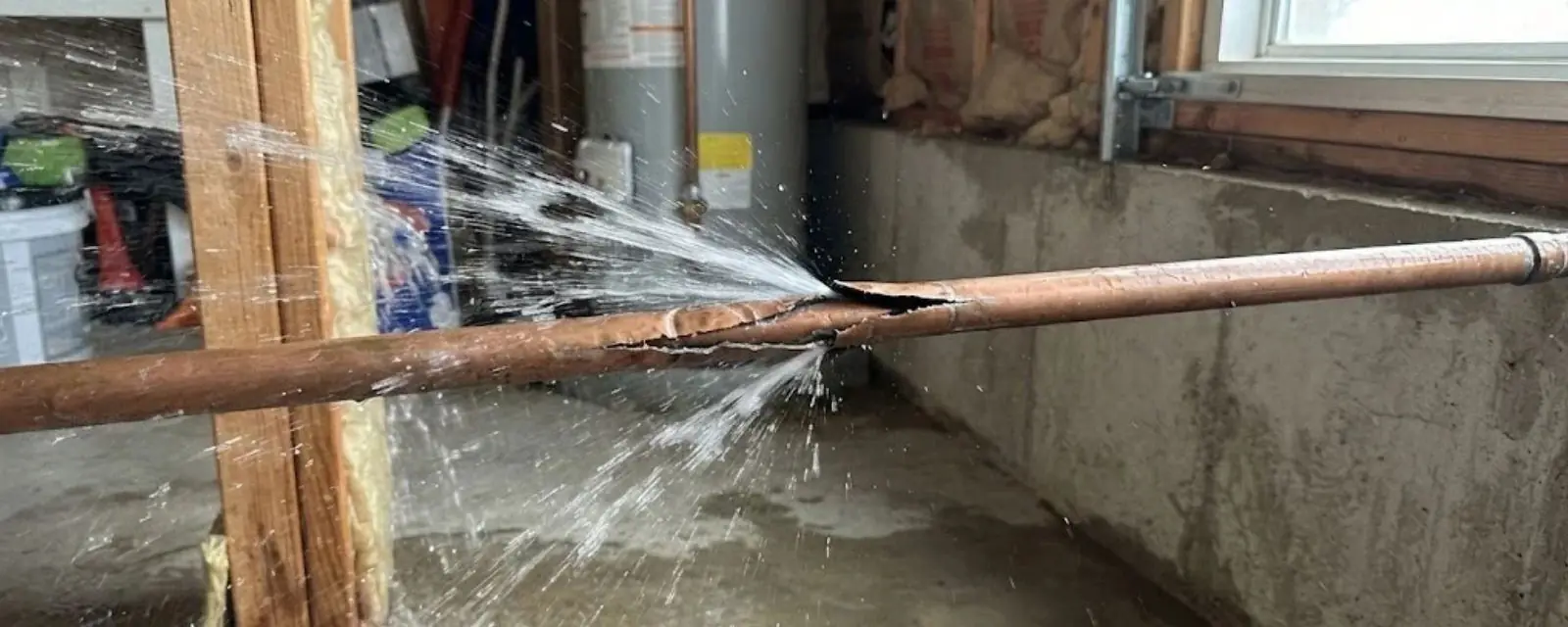
When a burst pipe is an emergency
Any pipe that is spraying, pouring or dripping steadily is an emergency, because water spreads into walls and floors faster than most people expect. Work through these steps while you reach the phone:
- Turn off the main water valve, usually near where the line enters the basement
- Switch off the breaker for wet rooms if you can reach the panel safely and your hands and floor are dry
- Open a faucet on the lowest floor to drain the pipes and relieve pressure
- Photograph the damage for your insurance claim before cleaning up
- Call the 24/7 line and report the location of the leak
If you cannot find the main valve, or it will not turn, say that on the call. The plumber can also close the street side shutoff in many cases, or advise you on what to do next.
Why pipes burst in Winchester
Cold is the headline cause. Water expands as it freezes, and the pressure builds between the ice and a closed faucet. The pipe often splits where the ice formed, but the leak appears only after the thaw. Exterior walls, unheated crawlspaces, garages and the corners of older houses are the weak spots.
Age is the second cause. Houses of the age found in the Wedgemere area and the older streets near the center can still have galvanized steel supply lines that rust from the inside, and old copper that pinholes. If your home has had a repair before, another failure near it is likely. See our whole house repiping service if the plumber finds more than one weak section.
Frozen pipes before they burst
A faucet that runs dry on a cold morning means ice is in the line. Open the tap, leave it open and warm the pipe slowly with a hair dryer, working from the faucet toward the frozen section. Never use a torch or open flame. If you can see a bulge or a crack, shut off the water and call before thawing, since thawing a split pipe starts the flood.
Also check the spot where the pipe enters the house. An exterior wall with no insulation behind the sink base cabinet is a classic location. Open the cabinet door overnight in a cold snap to let house air reach the pipes.
How burst pipes are repaired
| Pipe type | Typical failure | Common repair |
|---|---|---|
| Copper | Split from freezing or pinhole corrosion | Cut out the bad section and sweat in new copper with fittings |
| PEX | Split near fittings after a hard freeze | Replace the section with crimp or expansion fittings |
| Galvanized steel | Rusted through or split at a thread | Replace the run, since neighboring sections are usually near end of life |
| CPVC | Brittle crack at a fitting | Replace the section and fittings |
The plumber opens as little wall as needed, so ask where access cuts will be made and who patches the drywall. A plumber repairs the pipe. Drywall, insulation and paint are a separate trade, and water extraction may be a restoration company's job.
Steps after the water is off
Once the pipe is repaired, slow down the cleanup. Wet drywall and insulation can grow mold within a couple of days, so ask the plumber about drying and call a restoration company if more than a small area is wet. Keep receipts, photos and the plumber's written invoice for your insurer.
Burst pipe coverage in most homeowner policies is for sudden and accidental damage, and denials are common when the claim looks like slow leakage over months. A leak detection visit documents the source and timing, which can help. Calls from Arlington and the other nearby towns follow the same order: water off first, then the 24/7 line.
What affects burst pipe repair cost
Prices vary with how much work the repair needs, not just the size of the hole. These are the main factors:
Most homeowner policies cover sudden burst damage but exclude gradual leaks and freezing in a vacant home. Check your policy before filing. Want your real number? Call (339) 216-9771 and the price is agreed before work starts.
Water coming through the ceiling?
Shut off the main and call the 24/7 line now.
Prevention before the next cold snap
Insulate exposed pipes in garages and crawlspaces, seal drafts around pipe penetrations and set the thermostat no lower than 55 degrees if you travel. Know where your main shutoff is and test that it turns. A valve that has not moved in ten years often will not close in an emergency, and replacing it is a small job that can save a large one.
Plumbing work in Massachusetts falls under the state plumbing code, 248 CMR 10.00, and plumbers are licensed through the Massachusetts Board of State Examiners of Plumbers and Gas Fitters. Ask any plumber to confirm their license and which permit the job needs before work starts.
Written by the Winchester Pro Plumbing team.
Burst Pipe Repair questions in Winchester
Yes. Shut off the main valve first, then call. Every minute with the water on adds damage. If the valve is stuck, tell the dispatcher right away.
Often yes for sudden and accidental damage, but policies differ. Gradual leaks and damage in a vacant home are commonly excluded. Photos and a written invoice help the claim.
Yes. Burst pipes do not keep business hours and neither does dispatch. The line is open 24/7, including holidays, and same-day appointments are offered when available. Shut off the main first, then call and tell the dispatcher where the water is and whether the ceiling below is wet.
Usually the plumber opens a small access hole at the leak. Wall camera and thermal tools can find the exact spot, which limits drywall removal. Patching is typically a separate trade.
Massachusetts guidance says minor repairs do not need a permit, but replacing or relocating piping or valves does. A licensed plumber knows which applies and pulls any permit through the Winchester Building Department.
Open the tap, warm the pipe slowly with a hair dryer or warm towels, and never use a flame. If a pipe is already bulging or leaking, shut off the main and call.