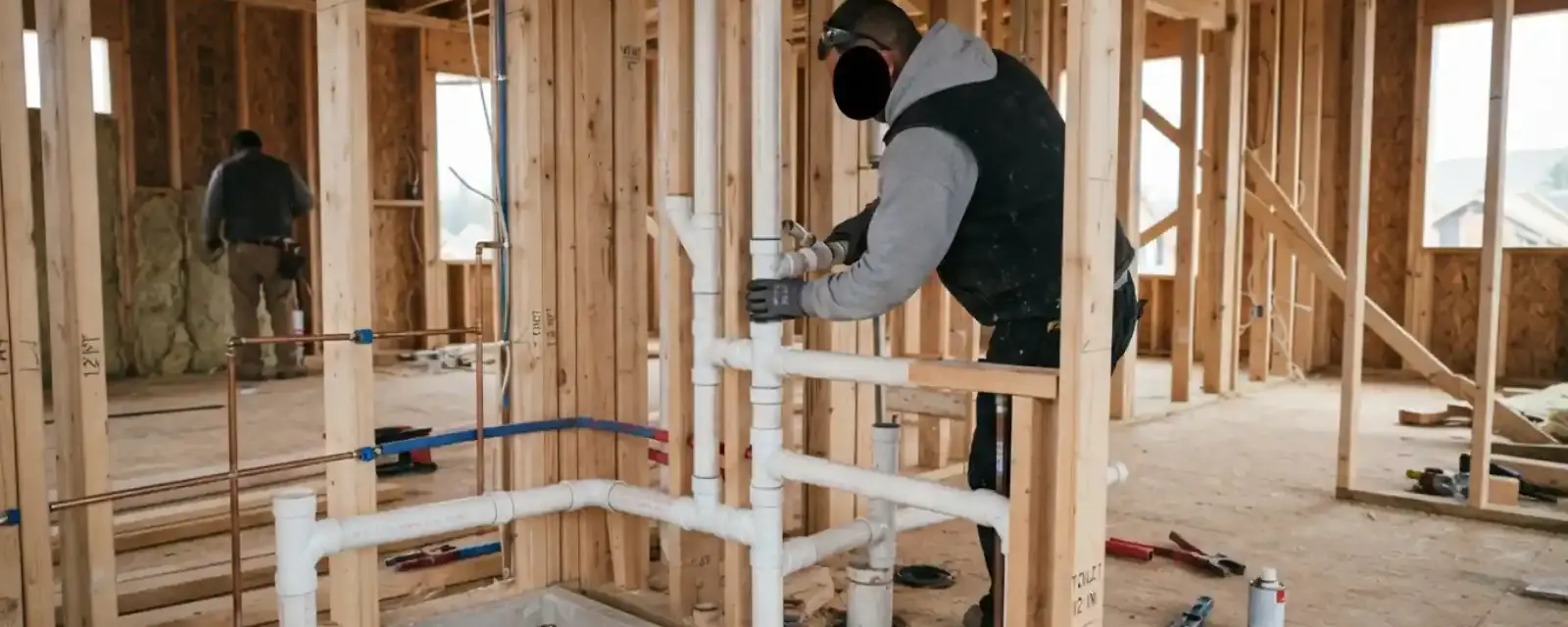
What counts as plumbing installation
Installation is new work, not a fix. A new vanity, a relocated kitchen sink, a basement bathroom, a laundry hookup or a whole new plumbing system for an addition all qualify. Each involves supply lines, drains and vents, and each has to pass inspection.
If something broke and you need it repaired quickly, a repair page fits better. For example, faucet repair covers fixtures that fail. This page is for planned work, and it is the one where early planning saves the most.
Rough-in, vents and drains
Rough-in is the stage when pipes are placed in the open walls, before drywall. The plumber sets supply lines, drains, vent pipes and stub-outs to the exact positions of the fixtures. Getting the measurements right here prevents patched walls later.
Vent pipes are the part people forget. Each drain needs a vent so that air can enter behind flowing water. Without it, traps siphon dry and drains gurgle. Vent pipes run up through the wall and out through the roof or tie into an existing vent stack. A basement bathroom adds a question: does the waste go by gravity to the sewer, or does it need an ejector pump?
| Project | Plumbing work | Things to decide early |
|---|---|---|
| New bathroom | Supply, drain, vent, shower valve | Fixture locations, venting path, slab or joist access |
| Kitchen remodel | Sink, dishwasher, disposal, ice maker line | Island sink venting, appliance hookups |
| Basement bath | Rough-in below grade, ejector if needed | Sewer depth, floor cutting, sump nearby |
| Laundry move | Supply, drain, standpipe | Drain capacity, access |
| Addition | New supply branch, drains, vents | Connection point, water heater capacity |
Remodeling an older Winchester house
Winchester has many houses with original framing and plaster that tell you where pipes can go. A Queen Anne in the Wedgemere district has a different structure from a Cape on the West Side. Floors may be thick, walls may be balloon framed and the old drain stack may be cast iron. The plumber looks at these before drawing a plan.
Remodels in older houses are a good time to inspect what is behind the wall. If galvanized supply lines or failing cast iron turn up, the options are on the repiping page and the sewer line repair page. Fixing them while the walls are open costs far less than opening them again later.
Permits and inspection in Winchester
The state consumer fact sheet says a local plumbing inspector must issue a permit before plumbing is installed, altered, removed, replaced or repaired. Permits for plumbing work are issued only to licensed plumbers. Winchester's Building Department lists a plumbing and gas inspector and an online permit system at Town Hall.
The inspector checks the work at rough-in and again at finish. Ask the plumber to schedule inspections in advance, and keep the permit card on site. If someone offers to skip the permit to save money, that is a red flag. Unpermitted work can cause problems at a sale or an insurance claim. Permit rules vary, so ask the Winchester Building Department about your case.
Choosing and supplying fixtures
You can often supply your own fixtures, but check that they fit before the work starts. Confirm rough-in dimensions, drain sizes and valve compatibility. Ask the plumber whether the warranty applies to customer-supplied parts. Order extras, like a spare cartridge for a specialty faucet.
For water heaters, ask the plumber to size and select the unit as part of the project. See our water heater installation service for what to ask about venting, expansion and permits.
What affects plumbing installation cost
Installation prices vary with scope. Key factors:
Insurance does not pay for planned improvements. Keep permit records, because they help with resale and any later claim. Want your real number? Call (339) 216-9771 and the price is agreed before work starts.
Planning a remodel or addition?
Call (339) 216-9771 to plan the plumbing with a licensed plumber.
Working with your contractor
If a general contractor is running the project, ask for the plumbing scope in writing, including who pulls the permit and who handles patching. Coordinate the sequence so the plumber is on site before insulation and drywall. Missed sequence is the reason many projects see a second visit. Contractors working in Woburn, MA can call the same number to schedule a rough-in.
In Massachusetts, the state plumbing code at 248 CMR 10.00 sets the rules for installation and repair, and licensing comes from the Board of State Examiners of Plumbers and Gas Fitters. Permit rules vary by job, so ask the Winchester Building Department or your plumber what applies to yours.
Written by the Winchester Pro Plumbing team.
Plumbing Installation questions in Winchester
In Massachusetts, replacing or relocating fixtures needs a permit through the local plumbing inspector. The licensed plumber pulls it.
Usually yes. Confirm dimensions and the warranty terms before the work starts.
They let air into the drain system so water flows freely and traps keep their seal. Each fixture drain needs a vent, either its own or through a shared one.
A typical rough-in takes a day or two once the layout is final. Complications such as slab cutting extend it.
Often yes. The key question is whether waste can flow by gravity to the sewer or needs an ejector pump. A site visit answers it.